About me
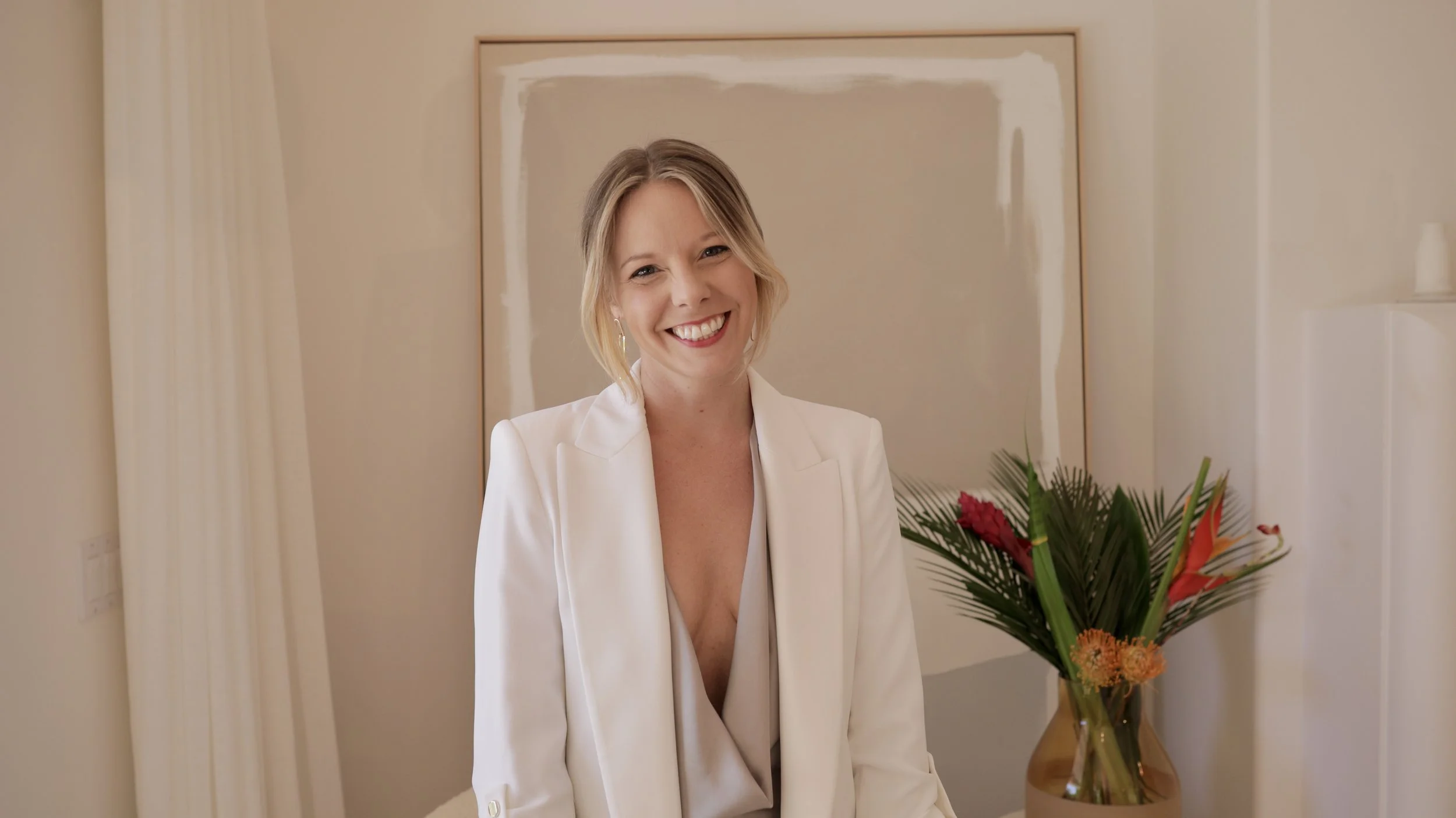
I have always felt my mission on earth is to live a kind of quiet devotion: to peacefully love, and to create what reflects love on earth — and love of earth.
Because of this, my artwork often evokes a quality of lightness, a peace, a feeling of airiness, or sometimes earthiness. I create phenomenological art — and for me, it's not merely about the physical elements of nature, but the ways we feel warmly wanted by a ray of light, wondrous and softened by a wide horizon line, urged forward into the future by a strong wind at our backs, or even awe-struck at the cracking of a plane of earth beneath us.
I was raised among environmental contradictions, and also among trees. In Portland, forests around me fell, and voices rose alongside them. There was clearcutting, and protest; there were systems of harm, and — woven through them — small and luminous human experiments in blending nature with the city: urban spaces that felt like woods and meadows, businesses rooted in evolving eco-conscious culture, communities that grew communal food again. I came to understand that ecosystems, like people, can heal — that regeneration is not abstract, but a lived reality, for people and for forests alike.
This understanding carried me into my early path, which moved through conflict mitigation, diplomacy, and humanitarian aid. I studied international affairs and conflict resolution, then stepped into the field, working at the intersection of environment and human resilience. In Jordan, alongside survivors of the Iraq War, I witnessed the slow, courageous rebuilding of life: new trades learned, water harvested from the rare desert rains, community centers filled with heroic determination and a rebounding love of life. In Sudan, I stood with women and girls facing desertification not as victims, but as proud and profoundly inspired leaders — cultivating food with skilled hands, building with bricks of earth, shaping the futures of their families from the ground up, truly, from the fertile soil upwards.
Hope, I learned, is often material. It is often energy so strong and so condensed that it does — it must — take form.
In that knowing, I felt called to another layer of learning. At RISD, I began to follow my own emergent inquiry: How do we make more room in urban lives for sensing the natural world - the dynamic phenomenological qualities of nature? Why do we universally experience awe at light and air - why are all of us humans stunned and silenced so profoundly by that grace?
My work became increasingly concerned with what we build — how dynamic light moves through a space over the course of a day - or a season. I was fascinated by the way buildings sometimes do (and always can) create greater awareness of natural beauty.
Then, in the architecture world, I created fluid, environmentally attuned structures - attempting to dissolve the boundary between building and landscape.
In residency at MASS MoCA, I built immersive textile installations of air and light, wanting to make "stages" for their movement - to make visible the movement of phenomenological life.
This inquiry later led me to explore materials at the nano scale at Harvard's Wyss Institute for Biologically Inspired Engineering. There I searched for ways that science, design, and nature might converge into something both intelligent …and deeply felt. For me, this ‘design science’ was never separate from art. The artful beauty of natural light, of air, of earth, can and must come into our building environments. Because, when they do… there is, simply, a greater peace within that space.
My art practice now quietly moves between philosophy and form. I continue to explore art that is organic and phenomenological - and perhaps even ‘relational’ when it describes bodies dancing with earthly gravity, and moving with each other in a certain abstract and spiritual space.
But… the movement of this stunning earth will always call my attention, and make me feel more peaceful. Always, my mission is to create a more harmonious and loving world.
I hope a little bit of peace ripples into you.
With gratitude for your eyes on my words,
Aaro Ainsley